
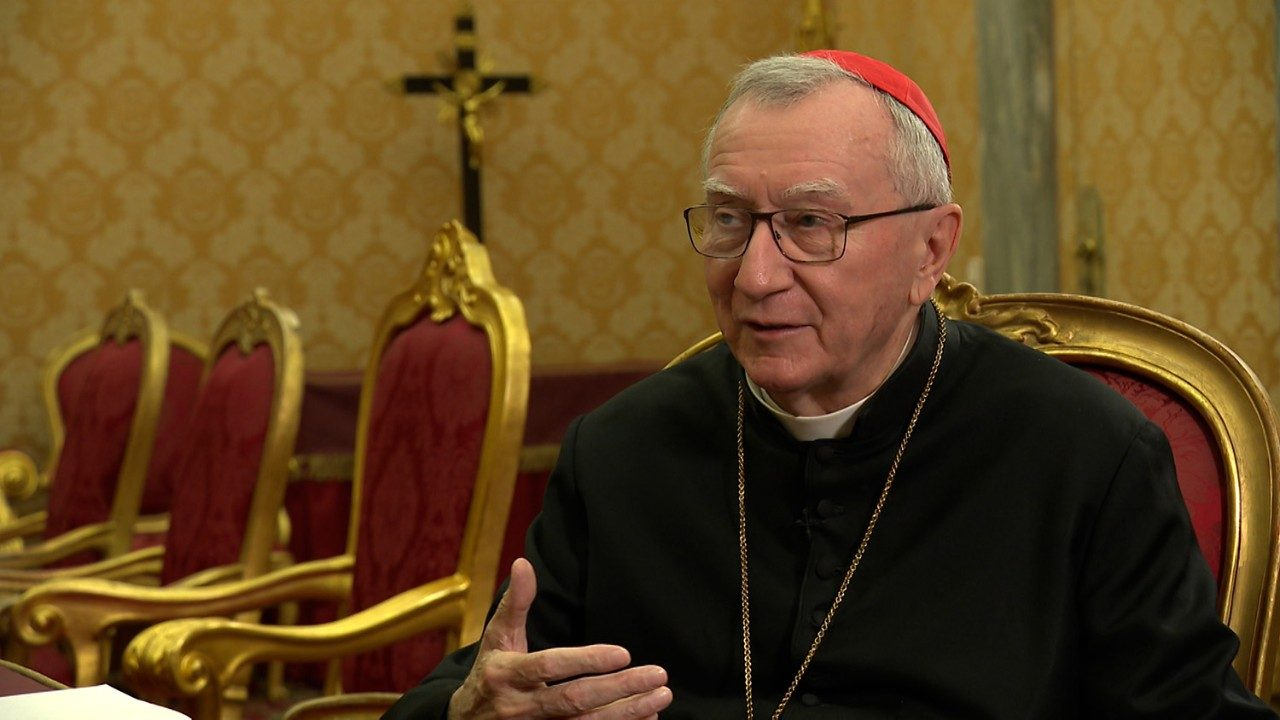
Cardinal Parolin: Pope’s visit to Monaco an invitation to faith and encounter
The Principality of Monaco is awaiting the Successor of Peter. The Pope’s first journey in Europe outside Italy is intended as a concrete sign of closeness and encouragement in faith, not only for the community of this small Catholic State, but for humanity as a whole. Cardinal Pietro Parolin, Vatican Secretary of State, expresses the hope that “this journey will give new impetus to the mission of the local Church, consolidating shared commitment on urgent fronts” such as the protection of creation, the defence of life, and the promotion of international solidarity, without forgetting “the most vulnerable.”
As is well known, this is Pope Leo XIV’s first European destination outside Italy, which makes it an original choice. Historically, the visit also carries particular importance, since the last visit of a Supreme Pontiff to Monaco dates back to the 16th century, when Paul III travelled there in the context of peace negotiations between Charles V and Francis I. There are also numerous points of convergence between the Holy See and Monaco, where Catholicism remains the state religion, which is rather exceptional in today’s European context, particularly regarding the defence of life and other bioethical issues. Finally, of the Principality’s 40,000 inhabitants, around 10,000 are Monegasque nationals, who remain strongly attached to their traditions and particular devotions, foundations of their identity, unity, and continuity of institutions; I am thinking in particular of the important celebration of Saint Devota at the end of January. Thus, the institutional visit of the Pope is in perfect harmony with the pastoral visit of the Successor of Peter.
In an era in which international law appears weakened and at times overshadowed by the “logic of power”, with the dangerous return of theories that justify preventive wars, capable only of setting the world alight and reversing the strength of law into the law of force, small nations prove to be natural guardians of multilateralism. They represent an essential bulwark against authoritarian tendencies because, for a small state, legal norms are not a burden but the greatest guarantee of survival and freedom. Today, international influence is no longer measured solely by military strength, but by moral credibility and the ability to act as neutral bridges for reconciliation. Realities such as Monaco show that authentic security does not lie in armaments, but in the stability of relationships. A lasting peace must be first and foremost “just,” grounded in respect for human dignity and not imposed balances. It is often precisely small states that lead the global agenda on existential challenges such as ocean protection and sustainable development, issues that transcend geographical borders and call for shared responsibility.
