
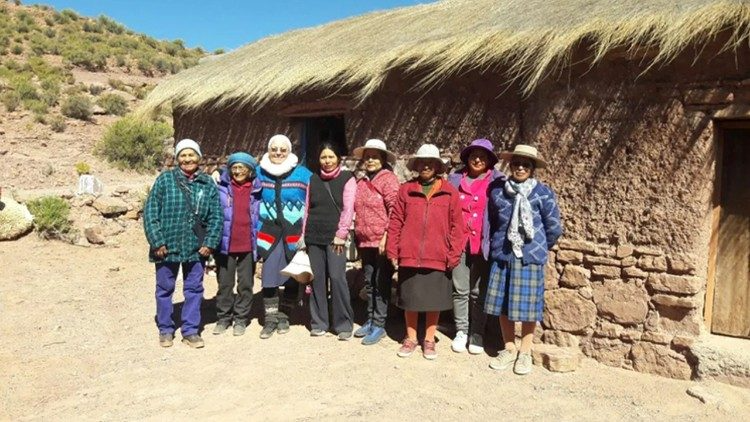
Religious sisters living mission and faith in highlands of Argentina
Existential peripheries and geographical peripheries are different: migrants, elderly people, villages built on top of landfills or in the desert areas of the highlands.
For thousands of years, the Colla people have been living in the highlands of Argentina’s Jujuy Province, (puna in Quechua), some 3,500 to 5,800 metres above sea level.
The region is marked by a harsh landscape: large plains surrounded by hills with scarce vegetation, where winter temperatures range between -28°C and +20°C, and where there are strong winds, snow in the summer, and long distances between villages.
Life unfolds in harmony with the geography. The locals recognize, appreciate, and pass this message on.
Forty-eight-year-old Sergio from Lagunillas del Farallón, an animator of the local Catholic community, says, “My wish is to always live here, to raise livestock and work in the fields, where nothing has a price, unlike in cities where everything is about money. I have instilled these values in my daughters: how to live in the country, how to cook… they have lived this. I taught them this. There are also difficulties involved with living here, such as the cold, transportation, including of animals, the walking.”
Recognition of the pre-existence of the original peoples and of their rights in the National Constitution was a slow process, which ended in 1994. The same recognition was a slow process for the original peoples.
To identify with their Andean identity, culture, spirituality and costumes was not easy because, on several occasions, this acknowledgment had resulted in discrimination.
