
Pope Leo XIV: Technology must serve truth and the common good
Pope Leo XIV has encouraged communicators to ensure that every technological tool is placed "at the service of truth and the common good," as the Church reflects on the opportunities and challenges presented by artificial intelligence.
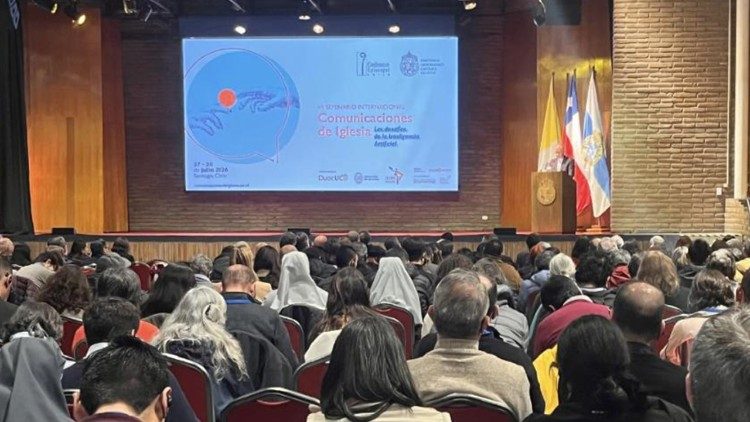
His message, signed by Cardinal Secretary of State Pietro Parolin, was sent to participants in the Seventh International Seminar on Church Communication, taking place on 27-28 July at the Pontifical Catholic University of Chile in Santiago.
The seminar, entitled The Challenges of Artificial Intelligence, has brought together communicators, pastoral workers, academics and Church representatives from across Latin America and the Caribbean to reflect on the ethical, cultural and religious implications of artificial intelligence in light of Pope Leo XIV's Encyclical Magnifica humanitas.
Addressing Archbishop René Osvaldo Rebolledo Salinas, President of the Chilean Bishops' Conference, the Pope expresses the hope that participants will promote "a communication that, in the face of the new opportunities offered by technological development, knows how to safeguard the dignity of the human person and place every tool at the service of truth and the common good."
Pope Leo also entrusts the seminar to the guidance of the Holy Spirit, praying that its participants may address the challenges posed by artificial intelligence "with wisdom and responsibility, so that ecclesial communication may foster encounter among people and contribute to the proclamation of the Gospel."
Opening the seminar, Cardinal Fernando Natalio Chomalí Garib, Archbishop of Santiago de Chile, reflected on the impact of social media, describing them as "truly human" spaces because they reflect emotions, relationships and conflicts.
"Everything that happens to us also happens there," he said, proposing four essential criteria for communication: truth, goodness, beauty and usefulness.
The Cardinal highlighted that Magnifica humanitas, dedicated to safeguarding the human person in the age of artificial intelligence, should not be read solely from a technological perspective.
"Today there is much discussion about artificial intelligence," he noted, "but this Encyclical speaks above all about human dignity and truth."
Cardinal Chomalí said communication rooted in those principles can strengthen community life in an increasingly individualistic society.
"We will promote dialogue, we will promote fraternity; in the end, we will build Jerusalem, not Babel," he said.
The same themes were echoed in the homily he delivered during the Eucharistic celebration that followed. Describing Magnifica humanitas as a "Christological" Encyclical, he called for communication marked by discernment and expressed the hope that artificial intelligence would always remain at the service of human dignity.
