
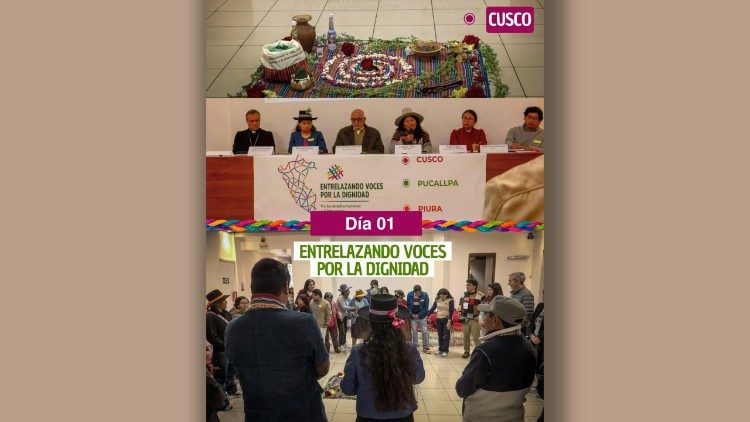
Church and organizations in Peru defend human dignity and human rights
Representatives of social organizations, Indigenous peoples and communities, grassroots groups, leaders, and human rights defenders from Ayacucho, Puno, Ica, Arequipa, Madre de Dios, Apurímac, Tacna, Moquegua, and Cusco gathered in Cusco for the Southern Macro-Regional Meeting, “Weaving Voices for Dignity: For Human Rights and the Common Good.”
The gathering provided a space to share experiences from different territories, identify common challenges, and develop proposals in response to the main human rights issues facing the country.
The first day brought together diverse realities from southern Peru and sought to strengthen cooperation among organizations, communities, and institutions committed to defending human dignity, justice, peace, and the common good. During the opening session, Bishop Lizardo Estrada Herrera, Auxiliary Bishop of the Metropolitan Archdiocese of Cusco and Secretary General of CELAM (Latin American and Caribbean Episcopal Council), emphasized that defending human rights is a responsibility that concerns both society and the Church.
“Defending human dignity, justice, peace, and the common good are not matters unrelated to faith,” he said, stressing that these principles are part of the Church’s Social Doctrine and its commitment to walking alongside people.
The meeting addressed a reality that transcends the borders of individual regions. Inequality, violence, discrimination, conflicts over land and water, environmental damage, and demands for recognition of rights are among the concerns voiced from different parts of the country.
Against this backdrop, the theme “Weaving Voices for Dignity” highlights the need to strengthen listening and social cooperation. For Bishop Estrada, no voice should have to stand alone, and national problems cannot be fully understood without listening to the people and communities who experience them directly.At the same time, southern Peru was presented as a region of memory, organization, resilience, wisdom, and hope, where communities and organizations continue to develop proposals and seek alternatives in response to situations affecting their rights and living conditions.
