
Castel Gandolfo: 400 years of papal care for the people and the land
In Castel Gandolfo, the night of 5 September was marked by celebrations as residents gathered for the solemn Eucharistic celebration in honour of the town’s patron Saint Sebastian. Presided over by Monsignor Angelo Pennazza, Episcopal Vicar and parish priest of Saint Joseph’s in Pavona, the liturgy concluded with a procession carrying the saint’s relics.
On the afternoon of 6 September, a historical procession, with 17th-century costumes and around thirty participants in period dress, will recreate the atmosphere of four centuries ago, when Pope Urban VIII's arrival by carriage marked the inauguration of the papal summer residence. The special celebration was organised jointly by the municipality, the Pontifical Parish and local historian Luciano Mariani to mark this particular anniversary.
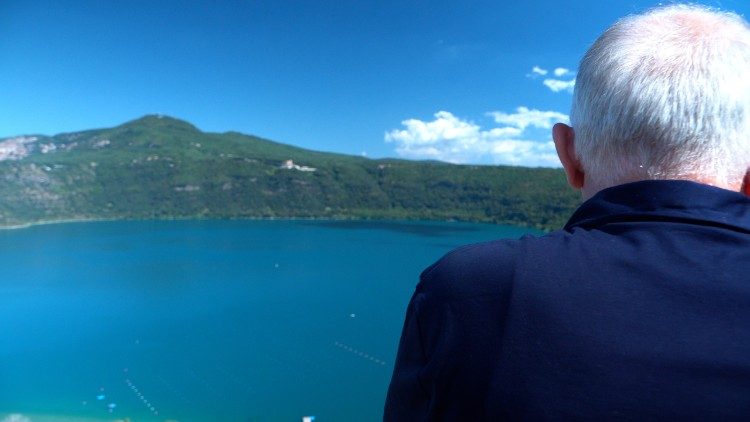
Father Tadeusz Rozmus, parish priest of Saint Thomas of Villanova, the church next to Palazzo Barberini, tells Vatican News about the history of these places, which have been dear to so many pontiffs. From the church terrace, one can admire the same spectacular view: Monte Cavo, a dormant volcanic cone that has been inactive for 10,000 years. Rising to almost 1,000 metres (about 3,281 feet), it is the second-highest mountain in the Alban Hills, within the Regional Park of the Castelli Romani, and overlooks the magnificent Lake Albano.
In 1596, during the pontificate of Pope Clement VIII, the Apostolic Camera seized the Savelli family’s fief and castle, after they had accumulated a substantial debt. At the request of Urban VIII, the property was incorporated and renovated between 1624 and 1626 according to designs by Carlo Maderno, becoming the historic summer residence of many Popes.
Tradition holds that on 10 October 1626, cannon fire was heard in Rome at dawn, while a papal procession of carriages accompanied the Pope as he entered Castel Gandolfo. A place of great natural beauty, which had already attracted Roman emperors, became a pontifical residence where one could breathe clean air and escape the oppressive summer heat of the Eternal City.
Pope Alexander VII developed an extraordinary affection for these lands, Father Rozmus recalls. “He brought so much new life here. He built the Church of Saint Thomas of Villanova, which he himself consecrated in 1661, on the site of a pre-existing small church dedicated to Saint Nicholas. At the time, the Augustinians were responsible for pastoral ministry, and later the Salesians came. It is also said that he was the first to bring here what was known as a brigantine, a two-masted sailing vessel, and he sailed on the lake aboard it.”
The parish priest further explains that Pope Alexander VII was responsible for a profound transformation of the area. Among other things, he involved Gian Lorenzo Bernini in enhancing the artistic splendour of the works both inside and outside the residence.
